
The parable of the marketing apprentice

Do you know the parable of the sorceror’s apprentice?

The sorcerer leaves the tower for a bit, and his apprentice uses what magic he’s learned to get the broom to come alive and start fetching pails of water. Except the stupid broom, once it has gotten the command, won’t stop. The apprentice hasn’t learned this magic incantation yet.

So more and more water keeps being sloshed into the tower. The apprentice starts to panic and decides to chop the broom in half. Not smart. His problems are now doubled — two brooms are bringing twice the water.

This is akin to what happens when people start learning about marketing and copywriting. For example, the very first bit of marketing advice you’ll hear is to focus on how your offer benefits the prospect.

“Don’t make it about you, make it about them!”

It’s a solid piece of advice. And it should be used, when and where it’s needed. But is it the only incantation a marketer needs to know?

I thought of this a few months back when I got a promotional email from a health coach named Ari Whitten. Ari runs a very popular online course called the Energy Blueprint, and he was sending an email to his list to promote his new book. The subject line? “My New Book is HERE!”

Who cares, right? Where’s the benefit? What’s in it for me, Ari?

Well, apparently, much of Ari’s list cares. Through motivating his own loyal followers — and probably with a lot of affiliate help — Ari’s book shot up to the #2 spot in the health category on Amazon, and within the top 40 of all books on Amazon.

In a way, this is reminiscent of what Gene Schwartz calls the “most aware” state of customer awareness. From Gene’s Breakthrough Advertising:

The customer knows of your product — knows what it does — knows he wants it. At this point, he just hasn’t gotten around to buying it yet. Your headline — in fact, your entire ad — need state little more except the name of your product and a bargain price.

At the same time, this isn’t really about awareness of the product. Instead, the awareness is about Ari himself. People know him and want what he has to offer, without taking too much care of what his offer actually is.

But let’s tie this back to the sorcerer’s apprentice.

Wouldn’t Ari have been more successful if he had pitched the benefits of his new book right in the subject line? Maybe, at least for selling this one book. That’s like telling your broom to go fetch the water.

However, for the long term, always shouting benefits might not be the best strategy. If you keep writing to the same people, and all you do is talk benefits, without doing other things to build a bond with your readers (like entertaining them, teasing them with curiosity, or relating to them on a personal level), then you eventually lose their attention and you make your job harder — or impossible — for the long term.

That’s when you try chopping the axe in two. In the marketing world, that usually means making more and more extreme promises and claims. When that doesn’t seem to work, you chop again and again, making still more extreme claims.

That is, until the sorcerer comes back from his afternoon walk. He surveys the mess, throws the sleeves of his robe back, and  finally casts the magic spell (called “relationship”) to drive all these marketing problems away.

“My new book is HERE!”
The only way to evaluate copy

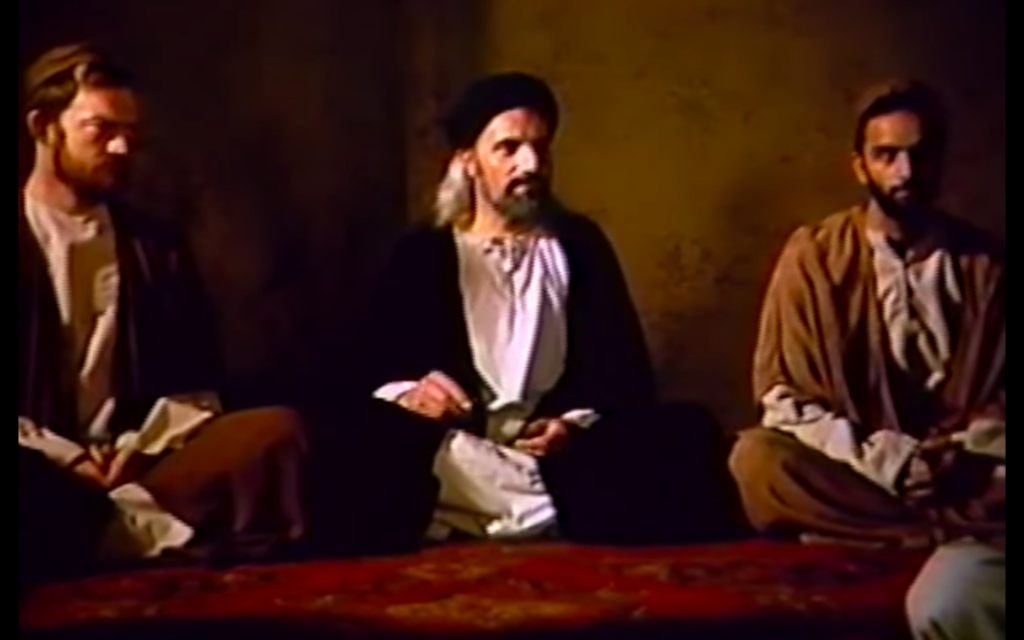
Three wise men doing a copy critique

Professor Skridlov: Father Giovanni, how can you stay here instead of returning to Italy and giving the people there something of the faith which you are now inspiring in me?

Father Giovanni: Ah Professor. You do not understand man’s psyche as well as you know archeology. Faith cannot be given to men. Faith is not the result of thinking. It comes from direct knowledge.

I started re-reading Gene Schwartz’s Breakthrough Advertising. And right on the first page, he offers this warning:

“Copy cannot create desire for a product. It can only take the hopes, dreams, fears and desires in the hearts of millions of people, and focus those already-existing desires on a particular product.”

And here’s another related quote, this from Gary Halbert:

“You know, I’m sick to death of people who can’t be bothered with the little nitty-gritty details of “hands on” experience. Of people who believe that somehow they can know a thing without experiencing it. Listen: It is possible to be “conversant” with something and really not have any kind of “gut understanding” of it at all. I’m sorry, but no matter what your Mommy and Daddy told you, men can never really understand the pain of childbirth, priests cannot comprehend the joys of sex, “normies” can never understand alcoholics, and not one speck of true advertising wisdom has ever been written by a PhD.”

And finally, a bit from a recent Ben Settle email:

“This is, btw, why I don’t do critiques anymore. (Besides the fact I hate doing copywriting critiques) As Doug D’Anna put it in the same interview: ‘How can I offer somebody a copywriting critique on a piece of sales copy for a product or a prospect that I am 100 percent unfamiliar with?'”

Here’s how this ties together in my head.

Nobody can really judge good copy unless they are a prospect and ready to buy. Nice-sounding copy can bomb. Awful copy can sell.

So how do you write good copy? Research is important. So is experience. So is intuition. Then there’s feedback from other experts.

All that stuff is great, but ultimately, none of it is conclusive.

Fortunately, direct response copywriting is one area where we don’t have to agree to disagree. We can know which appeal is best. Even if we cannot see inside people’s hearts, and even though we cannot have their problems (or faith). And that’s simply through sales.

How to sell probiotics with a lesson from Lucky Strike cigarettes

There’s a scene in the TV show Mad Men where the main character, Don Draper, hits on a moment of advertising brilliance.

Don has been tasked with coming up with a new ad campaign for Lucky Strike cigarettes.

But he hasn’t come up with anything.

And so he’s sitting in the meeting with the client, and it’s going terribly. Since he hasn’t come up with anything, he has to hand over the reins to a junior copywriter who pitches an angle that flops.

The frustrated and disappointed clients get up to leave.

And in that moment, Don hits on his inspired idea:

“We’ve got 6 identical companies selling 6 identical products. We can say anything we want. How do you make your cigarettes?”

The owner of Lucky Strikes shrugs. “We grow it, cure it, toast it.”

“There you go,” Don says. And he writes the new (and now age-old) Lucky Strike slogan down on the board:

“It’s toasted”

Now, if you know something about direct response marketing, this might seem like a typical example of useless branding copy.

Where’s the benefit, after all?

Well, sometimes you don’t need to scream benefits, even in direct response copy.

I thought of this today while I was working on a sales page for a probiotic.

Probiotics are a huge market right now.

And many people are already aware of what probiotics do (gut health, immune system, etc).

The problem for many people at this stage is not, “How can I fix my awful bloating/indigestion/gas?”

Instead, the problem now is “How can I choose from this sea of probiotic products which all claim to reduce my awful bloating/indigestion/gas?”

It’s something that the copywriting great Gene Schwartz called the 3rd stage of market sophistication. From Gene’s book Breakthrough Advertising:

“If your market is at the stage where they’ve heard all claims, in all their extremes, then mere repetition or exaggeration won’t work any longer. What this market needs now is a new device to make all those old claims become fresh and believable to them again. In other words, A NEW MECHANISM — a new way to make the old promise work. A different process — a fresh chance — a brand-new possibility of success where only disappointment has resulted before.”

For the probiotic sales page that I’m working on, that mechanism is clear: the specific strains in the product have clinical studies showing they actually work. This sets the product apart from just about any competitor on the market right now. Applying the Lucky Strike lesson, we could sum up the sales message as:

“It’s clinically proven”

Now, in the Mad Men episode, Don winds up giving an inspiring speech about how advertising is all about happiness.

The fact is, it’s more about hope — the hope that our problems can be solved.

And if your customers are a bit confused or jaded because of other similar products on the market, then you have to give them hope that your product really is better or different than anything they’ve seen before.

John Bejakovic

P.S. If you need copywriting in the health space that can either wow with benefits or cajole with mechanisms, then you can get in touch with me here:

https://bejakovic.com/contact