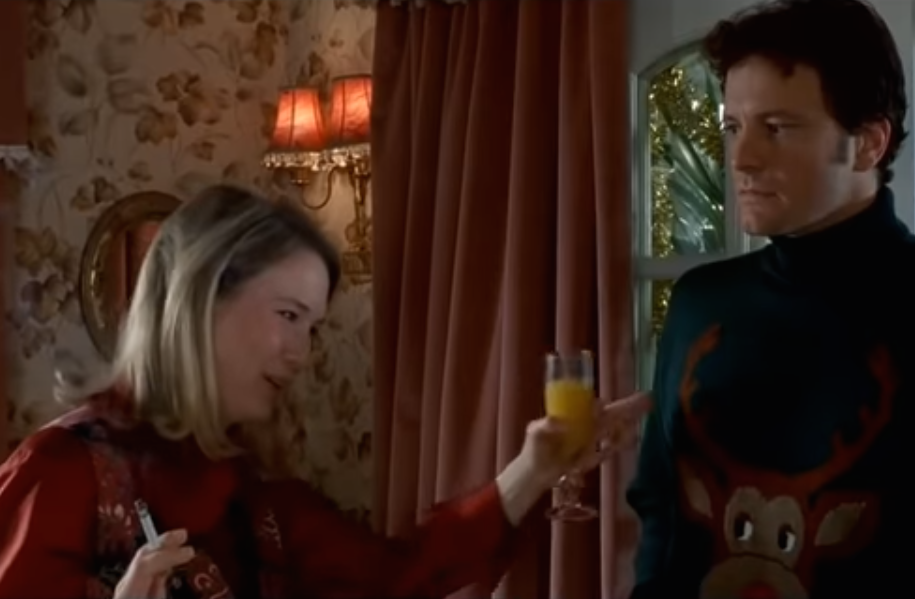
A clever persuasion tactic from a 1970s racist lackey

Here’s a bit of movie trivia:

Woody Allen has won the Academy Award for best original screenplay three times. Twice, he did it alone. Once, in collaboration with Marshall Brickman.

Francis Ford Coppola has also won the same award three times, as have Billy Wilder and Charles Brackett. Each of them has shared at least one of those awards.

Only one guy has ever won the Academy Award for the best screenplay three times, working entirely by himself.

That guy is Paddy Chayefsky.

Right now, I’m rewatching my favorite Paddy Chayefsky Academy-Award-winning movie. It’s called Network, and it deals with the network TV business in the 1970s.

Halfway through the movie, Diana Christiansen, a heartless new breed of TV exec, meets with a representative of the Communist Party of the United States, Laureen Hobbs, in order to discuss making a program based on live recordings of acts of political terrorism. This is how the introduction goes:

Diana Christensen: Hi. I’m Diana Christensen, a racist lackey of the imperialist ruling circles.

Laureen Hobbs: I’m Laureen Hobbs, a badass commie nigger.

Diana Christensen: Sounds like the basis of a firm friendship.

Clever, right?

“Allow me to disarm you with my honesty”

This introduction does a few things well. For one thing, Diana agrees with what Laureen already believes (the Marxist idea of “class for itself”). At the same time, the introduction is entirely and brutally honest, almost self-dismissing. It’s also very different from what is expected, immediately stirring curiosity and buying a bit of time.

This kind of strategy is what negotiation coach Jim Camp called a “negative stripline.” A negative stripline is when you go fully negative on some sensitive point, to the extent that the other side feels a bit bad and wants to reel you back in towards more middle ground.

So how can you use negative striplining in marketing?

Well, if you’re sending out cold emails to prospect for new customers, you could try opening with something like:

“Hello, my name is John Bejakovic and all I really want is some of your money. However, since I don’t have the skills to rob you, I have to offer you something you’d value in exchange. In my case, the only thing I know well is sales copywriting.”

If you’re selling an ebook about aromatherapy (as I plan to do soon), you could start off the sales letter by saying:

“There’s been a lot of hype about essential oils, and most of it has zero basis in reality. In fact, essential oils have on occasion hurt people who tried using them. And yet, there are cases when essential oils are not completely worthless, and can even be used safely.”

If you’re selling a probiotic:

“The human gut is enormously complex. Scientists know only a little about the myriad interactions between gut bacteria, other species of gut bacteria, and our own bodies. Odds are, they won’t have a good idea about it for another 100 years, and there’s no way to make any firm recommendations right now. However, if you want to self-experiment as a way of fixing your digestive issues, then this probiotic might be worth a look. Here’s why.”

I’ve never written anything this extreme for any of my clients. I don’t know if it would work. But if you want me to write something brutally honest (and possibly disarming) for your business, here’s where to go.

6 ways to stir up curiosity (cont.)

Onwards and upwards. Continuing from my post yesterday, here are 3 more ways to create and amplify curiosity:

4 Flaunt the velvet pouch

When it comes to copywriting, the method of the velvet pouch is possibly the sexiest, most effective, and most profitable way to create curiosity. It certainly seems to be very prevalent on the Internet today, particularly in long-form sales letters and VSLs.

In many ways, the velvet pouch idea is a combination of several of the techniques from yesterday’s post. But I also feel like this method is tapping into human psychology on some unique, fundamental level, and that’s why I decided to include it on its own.

I found out about the velvet pouch technique from Michael Masterson’s and John Forde’s Great Leads. Here is the relevant section from the book, which is talking about lesson from a door-to-door salesman named Harry:

After gaining admittance to the apartment, Harry would start his pitch about the quality of our cookware, taking out the pots and pans individually from the case. But they were each encased in plush, royal blue velvet pouches. As Harry described the features and benefits of the cookware, he would gently massage the pots, first from outside over the velvet pouches, and then by slipping his hands inside them but still keeping them hidden from the prospect.

“Just keep your eye on the customer,” he told me. “In the beginning they’ll be looking at you. But as you go on, you’ll notice that they will shift their focus to the pots and pans. That lets you know they are getting interested. Keep hitting them with the benefits while they stare at what you’re doing. And never, ever tkae the pots out until you know they have the prospects’ full attention.”

Masterson and Forde use this story to kick off their chapter on what they call the secret lead. In other words, the velvet pouch is all about the mystery and intrigue that builds up when a secret is hovering around in the air.

In some ways, this is similar to a combination of the open loop and the teasing from yesterday. But like I said, there also seems to be a fundamental human hunger for secrets, even if they aren’t clearly associated with any benefits. I think that also explains why “secret” and “mystery” are marketing power words that can in many ways make a headline on their own.

By the way, I think trying to disqualify yourself (or what you’re offering) can sometimes work in the same way as a secret. Once something is taken off the table, people suddenly become more intrigued by it. That’s why I think the start of my post from two days ago is in some ways also a secret lead:

Fair warning: the following post contains some sexual, politically incorrect references. It might offend some people.

It’s ok to click away. But if you insist on reading, here goes:

5 Be different


6 Be new/Share news

The new kid on the block

When Gary Halbert died, Gary Bencivenga wrote a post explaining why Gary H.’s newsletters were so interesting. The number one thing, according to Gary B.?

1. Gary shared news. Sometimes he was the news, sometimes it was a dramatic turn of events in his tumultuous life, but often enough, he shared news of a technique or strategy that would make your response and profits soar. You couldn’t afford to miss even one of these gems, so you had to open every issue.

Many times, being new is sufficient unto itself, even if there’s no implied benefit, and not even anything clearly different. Novelty seems to directly tap into human psychology. Remember being in elementary school when a new kid appeared in class? Like in the photo above, that new kid was automatically interesting, at least for a while.

About number 5 above…

I tried to be different with the “be different” section above, so I didn’t expand on it at all. Maybe I should have just left it at that, because being different can be pretty straightforward. Still, here are a few examples:

First off, there’s the picture from yesterday’s post: “WORLD’S ONLY FEATURE DANCER WITH 3 BOOBS.” Is it a benefit? Hardly. A secret? Not at all. Just morbid fascination and curiosity with something different.

Second, there’s the story I started with two days ago, about a guy named Yad sleeping with a girl only a few hours after meeting her — just because he was different enough from other guys to make her very curious.

Finally, a copywriting example from my own essential oils list. At one point, I was promoting an online video series about longevity. The promise of the series was “How to live to a happy and healthy old age.”

That’s a fine benefit, but everyone is already pushing the same. So I simply switched it around to be different. I retold an ancient Greek myth about a Trojan prince who gets eternal life but not eternal youth, and how it turns out to be a curse rather than a blessing. The subject line for this inspiring email: “How to reach a frail and unhappy old age.” It worked pretty well.

6 ways to stir up (and blow up) curiosity

Local business successfully employs curiosity

No time to dilly-dally today. Straight into the meat of this post, which is about how to create and amplify curiosity:

1 Use an open loop

I know of a fantastic way to stir up curiosity. It works particularly well with skeptical prospects, because it can be go completely under the radar.

But before I talk more about that, let me tell you about a guy named Andre Chaperon. Andre is famous in the copywriting world for a course called Autoresponder Madness, which teaches people how to write successful, story-based autoresponder sequences.

Some big Internet publishing companies, such as Mindvalley and Velocity House, have based much of their sales funnels on Andre’s teachings in Autoresponder Madness.

(Andre’s email methodology was the first I was exposed to when I started to learn about email marketing. I thought it was great then, and I think it’s great still — only surpassed, or rather complemented by,  the stuff that Ben Settle teaches.)

Anyways, one clever trick that Andre uses throughout his email copy, and that he teaches people in Autoresponder Madness, is called the “open loop.” You just saw an example of it four paragraphs back. It’s when you announce something intriguing, and then you completely drop it to talk about other things.

In my example above, the effect was probably not great, because you knew the suspense would be relieved after only a few paragraphs. But Andre frequently uses it across emails that will be sent days or even weeks apart.

Of course, the open loop is a standard technique in any story-telling medium. An extreme example is a cliffhanger in old comics or TV shows (more on this at the end of this post).

2 Tease/Intensify

Do you know why teasing is so great? It’s simply this: it will make your readers itch with curiosity, to the point where they’ll do anything to get the answer from you. And the thing about teasing is that it’s simple to do. Many people have used even without knowing anything about persuasion.

I’ll tell you all about how to do it, in just a second. Or maybe two. All right, here goes:

Teasing, by my definition, is simply dragging things out without actually giving anything away. The section above is one example.

You might find my teasing above annoying and transparent. But teasing can and should be part of good copy, both to build up anticipation and to “intensify” whatever is being talked about.

Here’s a less hokey example from my post yesterday:

But I believe there is another big pillar of influence that Cialdini left out. It’s in the story above. My guess is that it also drives about 90% of Internet traffic today. And according to famous copywriter Gary Halbert, it might even be the #1 reason that people buy stuff from advertisements.

I’m not really giving anything away here. I’m just restating and intesifying the benefits, and buying a bit of time in the process.

3 Tighten the knowledge gap

Here’s a puzzle for you. Why would a headline such as:

“Battery technology may emerge as a trillion-dollar threat to credit markets”

stir up more curiosity than a headline such as:

“Battery technology may emerge as a huge threat to other sectors”

After all, the second headline actually withholds much more information (Which sectors? How huge?) than the first. Shouldn’t that cause more curiosity as well?

The answer to this lies in the concept of a “knowledge gap,” a term I first read in Chip and Dan Heath’s Made to Stick. A knowledge gap is what ultimately creates curiosity — it’s the bit of knowledge we don’t have and we want to have so we can complete the picture.

The thing is, if the amount of information that’s withheld is too great, you don’t create curiosity. You create indifference. That’s what’s going on in the second headline above.

The way to create curiosity is to tighten the knowledge gap as much as possible without giving the farm away. Some well-known copywriter (Ben Settle? David Deutsch?) talked about good bullet points as giving away nine-tenths of what you need to know, but keeping that last bit so people have to buy your product to find out. That’s the right attitude to have with the knowledge gap.

Tightening the knowledge gap isn’t just about combatting general disinterest. It can also be used to hook skeptical, jaded prospects. Compare a subject line such as:

“The forbidden food you should be eating”

(which, by the way, is a real subject line from an email I got yesterday, and did not open) to a more specific subject line:

“The forbidden breakfast food you should be eating after workouts”

To me, it seems that the second subject line (which I just made up) might get me to wonder, “which breakfast food” and “why after workouts,” which might be enough to overcome my skepticism of reading yet another sensationalist health blog post.

4 Flaunt the velvet pouch

This blog post has run on longer than expected. And I’m getting sleepy. I’ll pick it all up tomorrow — starting with the secret of the velvet pouch.

“Until tomorrow — same time — same channel!”

Stuck on the emotional rollercoaster with nowhere to go

On May 28 of this year, many visitors to the Cedar Point amusement park, “The Rollercoaster Capital of the World,” got a special thrill.

They boarded the Millennium Force “giga coaster” — the biggest rollercoaster in the world at the time of its debut in 2000 — expecting a fast and gut-wrenching ride. Full of expectation, they started climbing the initial 300-foot ascent, and were preparing themselves to rush down the other side at 93 miles an hour.

Instead, what they got was a long wait. Halfway up the climb, the power went out. A car somewhere hit a utility pole, knocking out one third of the rides at Cedar Point. The folks on the Millennium Force sat up there in the air for two hours, cooking in the 90-degree heat.

Now a few days ago, I made a case against indoctrination emails, meaning emails that aim to build good will without trying to sell anything. My argument in that post was that people don’t read all your emails, so when they do actually read your emails, it makes financial sense to give them a chance to buy from you.

Today, I have a second argument against indoctrination emails (and other emails that don’t sell). This second argument has to do with the situation of being stuck on a rollercoaster, ready to scream and laugh — but not actually going anywhere.

“WOOHOOO!!! A way to resolve emotional tension!!!”

The rollercoaster I’m talking about is an emotional rollercoaster. In my experience, the best emails stir emotion. This emotion can be curiosity, frustration, anger, disgust, fear, greed, outrage, inspired benevolence, whatever.

Why emotion in emails? If you want people to open your emails day after day and to read them, you have to give them an emotional jolt, and do so frequently. I don’t have a much better way of explaining it than saying it’s simply what people want. I guess emotion gives color to an otherwise drab day.

(Interesting and useful information is great once or twice. But without a little emotional color mixed in, useful information quickly becomes a burden rather than a gift.)

Of course, emotion also makes sense from a different perspective. That’s because when people get emotional about something, it’s much easier to get them to take action. Meaning it’s much easier to get them to buy.

And here’s the thing. Getting people to buy when they are emotional isn’t just good for you. It’s good for them. The act of buying resolves the tension that the emotion stirred up. And it replaces it with a sense of purpose, hope, and resolution.

If you don’t believe me, think about the feeling you yourself had the last time you made a sizeable purchase online. I know I’m usually relieved that the indecision of shopping has been resolved, and I’m optimistic about what my new purchase will alow me to do.

So emotion + selling = good. But emotion without selling is like being stuck high up on a rollercoaster, not moving and not being able to finish the ride. At first it might just be puzzling, after that it becomes annoying.

What’s the alternative? Well, one option is to send out bland and boring emails that don’t stir anybody up. A better option, in my opinion, is to get people a little emotional, and to then give them a chance to buy a product or service that allows them to complete their rollercoaster ride.

The “Rule of One” applied to email copywriting

In the 2006 version of Casino Royale, there’s a classic James Bond pickup scene.

Bond is talking to the beautiful wife of one of the bad guys. After a bit of flirty banter, Bond looks her straight in the eye and says, “What about a drink at my place?”

He stares at her. She stares at him. The tension builds.

“Your place,” she says breathlessly, “is it close?”

“Very,” says Bond.

Now imagine if Bond couldn’t play so cool. Instead of throwing out that one proposal, imagine if he threw out three:

“What about a drink at my place? Or maybe some nachos? How about breakfast tomorrow in case you’re busy now?”

Even with his ice-cold stare, odds are he wouldn’t get the same response.

“Bond. James Bond. You can call me Jim. Or James. Whichever is easier.”

A while ago, I was reading “Made to Stick” by Chip and Dan Heath. This is the best book I’ve come across  on how to present ideas clearly and in a way that people will remember. One of the things the Heaths say is, “Say one thing. If you say three things, you end up saying nothing at all.”

Michael Masterson and John Forde’s “Great Leads” emphasizes the same concept, which they call “The Rule of One – One Big Idea.”

In fact, the book opens up with the story of two speeches that were given by two Agora copywriters. One speech focused on one idea, the importance of clarity in writing. The other was something like “12 rules I follow when writing copy.”

The audience thought both speeches were terrific. But at the end of the night, people were only talking about the single idea in the first speech.

I’ve recently been working on some emails for a cool product. The product helps people make their own fermented food. And the emails I’m writing are specifically for people who’ve stated that they want to ferment for health reasons.

I’ve been going around in circles writing these emails. I need to get across a few ideas. One is that fermented foods are important for your health. The second is that fermenting can be a hassle. A third is that store-bought fermented foods aren’t a great choice compared to fermenting food yourself.

The problem is I’ve been trying to do this in the same email. This breaks the “Rule of One.” No wonder I’ve been re-reading the emails and thinking they are somehow weak and unconvincing.

The fix is simple. Pick one idea. Develop it in detail. Present it clearly. And then do the same for the other ideas, but in separate emails.

The parable of the marketing apprentice

Do you know the parable of the sorceror’s apprentice?

The sorcerer leaves the tower for a bit, and his apprentice uses what magic he’s learned to get the broom to come alive and start fetching pails of water. Except the stupid broom, once it has gotten the command, won’t stop. The apprentice hasn’t learned this magic incantation yet.

So more and more water keeps being sloshed into the tower. The apprentice starts to panic and decides to chop the broom in half. Not smart. His problems are now doubled — two brooms are bringing twice the water.

This is akin to what happens when people start learning about marketing and copywriting. For example, the very first bit of marketing advice you’ll hear is to focus on how your offer benefits the prospect.

“Don’t make it about you, make it about them!”

It’s a solid piece of advice. And it should be used, when and where it’s needed. But is it the only incantation a marketer needs to know?

I thought of this a few months back when I got a promotional email from a health coach named Ari Whitten. Ari runs a very popular online course called the Energy Blueprint, and he was sending an email to his list to promote his new book. The subject line? “My New Book is HERE!”

Who cares, right? Where’s the benefit? What’s in it for me, Ari?

Well, apparently, much of Ari’s list cares. Through motivating his own loyal followers — and probably with a lot of affiliate help — Ari’s book shot up to the #2 spot in the health category on Amazon, and within the top 40 of all books on Amazon.

In a way, this is reminiscent of what Gene Schwartz calls the “most aware” state of customer awareness. From Gene’s Breakthrough Advertising:

The customer knows of your product — knows what it does — knows he wants it. At this point, he just hasn’t gotten around to buying it yet. Your headline — in fact, your entire ad — need state little more except the name of your product and a bargain price.

At the same time, this isn’t really about awareness of the product. Instead, the awareness is about Ari himself. People know him and want what he has to offer, without taking too much care of what his offer actually is.

But let’s tie this back to the sorcerer’s apprentice.

Wouldn’t Ari have been more successful if he had pitched the benefits of his new book right in the subject line? Maybe, at least for selling this one book. That’s like telling your broom to go fetch the water.

However, for the long term, always shouting benefits might not be the best strategy. If you keep writing to the same people, and all you do is talk benefits, without doing other things to build a bond with your readers (like entertaining them, teasing them with curiosity, or relating to them on a personal level), then you eventually lose their attention and you make your job harder — or impossible — for the long term.

That’s when you try chopping the axe in two. In the marketing world, that usually means making more and more extreme promises and claims. When that doesn’t seem to work, you chop again and again, making still more extreme claims.

That is, until the sorcerer comes back from his afternoon walk. He surveys the mess, throws the sleeves of his robe back, and  finally casts the magic spell (called “relationship”) to drive all these marketing problems away.

“My new book is HERE!”

The best kind of proof

I want to give you a demonstration of spooky action at a distance
For this to work, all you have to do is read the instructions below, and then when you get to the part that says “GO” carry them out. Once you’re done, simply keep reading this article.

So here are the instructions of my spooky-action-at-a-distance:
(Read through them once before you try them out)

1. Clasp your hands together with your fingers interlocked, thumb over thumb, index finger over index finger, etc.
2. Now, stick your index fingers out straight, but keep them apart.
3. And then, simply look at the space between your index fingers until something spooky happens. It might take as long as 10-15 seconds, but it might happen sooner as well.

Ready?
GO
.
.
.
.
.
.
.

Are you done?
That means my spooky-action-at-a-distance must have come through across time and space and pushed your two index fingers together until they were touching.

At least, that’s the idea
Hopefully it worked. And in any case, the point is not really to convince you of action-at-a-distance, but simply to illustrate the most powerful kind of proof. And that’s demonstration.

Product demonstrations work very well
You can take a car for a test-drive. You can try a shirt on at the store. You can walk around a home before buying it.

Then there are performance demonstrations
In his farewell seminar, Gary Bencivenga told the story of Elisha Otis, who invented the first safe elevator. Otis got in an open elevator in front of a crowd, while his assistant first cut one and then the other cable holding the elevator in place. Otis’s safety mechanism kicked in, saving Otis and the elevator, and finally convincing people that elevators are safe to use (hello skyscrapers).

This still works today
A while back, a video for the Purple mattress company went viral. The core of the video was a clever demonstration — the raw egg test:

Sometimes though, the demonstration doesn’t even have to be of the product
Like in this post that you’re reading. Or in this Bill Jayme add for Smithsonian Magazine:

This clever demonstration seems to be about engagement

So what’s the conclusion?
Always try for a demonstration. There are many creative ways to do this, and it’s worth putting in some thought to come up with one that works for you.

How to get going when you don’t know what to write

The first part of the Big Con happens on a train. I’m talking about the movie The Sting, where Paul Newman plays Henry Gondorff, an expert con man, who’s looking to fleece a mob boss named Lonnegan. (Lonnegan killed off one of Henry’s old pals.)

So Henry is now on a train, where Lonnegan regularly runs a poker game. Lonnegan cheats. But Henry cheats better.

Of course, there’s a lot of detailed info necessary to out-cheat a cheat. That’s ok. Henry has got a whole team of tricksters and confidence artists on his payroll. One of them, a guy named J.J. Singleton, comes to give Henry the lowdown right before he goes in to join the poker game:

SINGLETON: “He usually plays with a Royal or a Cadenza. [handing him two sealed decks] I got you one of each. He likes to cold deck low, 8’s or 9’s.”

“That’s nice work, J.J.”

Armed with this info, Henry goes into the poker game.  He slaps some gin on his face, acts the fool, and cleans up the table. Lonnegan is furious — and hooked for the rest of the Big Con.

Several times, I’ve written sales emails that started out just like this post. In other words, they referenced a movie, and then tied it into what I was promoting.

Once, this was the X-Men — I talked about Professor X’s ability to read minds, and said how this would help guys who want to please their women better (this was for a “rekindle your romance” course). Another time, I started off talking about the Shawshank Redemption, and then tied this into an ebook on treatments for chronic kidney disease.

The thing is, in both those emails, I was stuck at first. I knew the movie tied into what I wanted to say, but I didn’t know how to make the link. I made several false starts that were weak or rambled on for too long. The answer in both cases was to pick a specific scene, and lead off with that. And that’s the marketing lesson I want to crystalize in this post:

When it’s hard to figure out what to write, the answer is almost always to look for more info. Sometimes, that means going out and doing more research. Other times, it simply means focusing more on the details that are already at my disposal — like picking a specific scene from a movie.

Shooting off a couple of impossible bullets

An impossible bet

There’s a video of Ricky Jay at the end of a poker night, doing one last trick for his friends.

He fills a glass with water, puts a playing card on top of it. He then rolls up a second playing card into a little tube and puts this on top of the first playing card, and then puts an egg on top of the tube. “Here’s the bet,” he tells the rest of the guys. “I bet you that by throwing a card I can make the egg land inside the glass. Do I have any takers?”

It’s an impossible bet. The glass is covered by a card so there’s no way for the egg to get through. And all he’s got is some playing cards to throw. Of course, somebody takes him up on the bet. And yet, he throws the card, and gets the egg in the glass.

Today, I worked on a sales page for a video course on cryptocurrency investing. 80% of the sales page was bullets. Warning and danger bullets. Straight up benefit bullets. Curiosity bullets. And peppered in among these, a special breed, which I call impossibility bullets:

  • How to get an extra 10% return on your Bitcoin investment — even if the price doesn’t move one bit
  • How to take advantage of a crypto bull run — even while you sleep
  • How to safely use your cryptocurrencies — even on a computer infected with malware

Now that I’ve pulled them out, I realized they all had the same format:

HOW TO [GENERIC BENEFIT] — EVEN IF [SEEMINGLY INSURMOUNTABLE OBSTACLE]

In all 3 cases, the bullets wrote themselves, because there was an underlying mechanism which offered a surprising benefit. At the same time, I don’t think I could get away with these kinds of bullets too often — people would get skeptical instead of curious. (Unfortunately, copywriting isn’t a magic show — and people don’t like to be fooled by a sales page.) In this case, I think it will work, because the remaining 90% of the bullets are more moderate, and because there is other proof throughout the rest of the copy.

The only way to evaluate copy

Three wise men doing a copy critique

Professor Skridlov: Father Giovanni, how can you stay here instead of returning to Italy and giving the people there something of the faith which you are now inspiring in me?

Father Giovanni: Ah Professor. You do not understand man’s psyche as well as you know archeology. Faith cannot be given to men. Faith is not the result of thinking. It comes from direct knowledge.

I started re-reading Gene Schwartz’s Breakthrough Advertising. And right on the first page, he offers this warning:

“Copy cannot create desire for a product. It can only take the hopes, dreams, fears and desires in the hearts of millions of people, and focus those already-existing desires on a particular product.”

And here’s another related quote, this from Gary Halbert:

“You know, I’m sick to death of people who can’t be bothered with the little nitty-gritty details of “hands on” experience. Of people who believe that somehow they can know a thing without experiencing it. Listen: It is possible to be “conversant” with something and really not have any kind of “gut understanding” of it at all. I’m sorry, but no matter what your Mommy and Daddy told you, men can never really understand the pain of childbirth, priests cannot comprehend the joys of sex, “normies” can never understand alcoholics, and not one speck of true advertising wisdom has ever been written by a PhD.”

And finally, a bit from a recent Ben Settle email:

“This is, btw, why I don’t do critiques anymore. (Besides the fact I hate doing copywriting critiques) As Doug D’Anna put it in the same interview: ‘How can I offer somebody a copywriting critique on a piece of sales copy for a product or a prospect that I am 100 percent unfamiliar with?'”

Here’s how this ties together in my head.

Nobody can really judge good copy unless they are a prospect and ready to buy. Nice-sounding copy can bomb. Awful copy can sell.

So how do you write good copy? Research is important. So is experience. So is intuition. Then there’s feedback from other experts.

All that stuff is great, but ultimately, none of it is conclusive.

Fortunately, direct response copywriting is one area where we don’t have to agree to disagree. We can know which appeal is best. Even if we cannot see inside people’s hearts, and even though we cannot have their problems (or faith). And that’s simply through sales.