
How not to disappoint “The Agent”

It’s hard catering to international spies.

For example, back in the early days of my freelancing career, when I was a barely hatched duckling fresh out of the freelancing egg, I got a job writing for a woman who called herself “The Agent.”

She was basically a personal assistant, but she aimed to cater to high-powered businessmen, so she positioned herself with a bit of 007 mystique.

Need connections to Fortune 500 CFOs and CEOs? Or a party on a chartered plane flying around the world? Or a seat in a VIP box at the Monaco Grand Prix?

No problem. Talk to The Agent, and she’ll take care of you.

Anyways, The Agent hired me to write a sequence of emails, telling her story and explaining her unconventional services to a list of potential clients.

So I interviewed her.

Looked over her website.

Made an avatar of her ideal customer.

And then I wrote a series of emails in the Andre Chaperon SOS style, really selling her as a female James Bond who gets problems solved, doors opened, and connections made.

I honestly thought I did a good job.

Until I delivered the copy.

The Agent didn’t have any specific complaints. But she thought the emails weren’t really what she was looking for. And honestly, I can’t blame her.

Not because i didn’t do a good job.

But because I failed to do something important.

Something that’s become a pillar of the way I deal with clients these days.

And also something that almost guarantees that clients always wind up happy with the copy I write.

I’m talking about setting expectations. Expectations of what the copy will look like. How long it will take the client to get it. What kinds of results they can expect from it.

I make sure all these things are perfectly clear to a potential client before I choose to accept the dangerous mission of writing copy for them.

The thing is, this is just one part of a 4-step process for making sure clients get what they want. And important as it is, it’s not even the most important of these 4 steps.

For the remaining 3 pillars of continuing client satisfaction, you might want to look inside my upcoming book. It deals with becoming a successful sales copywriter on Upwork.

I’ll be launching it soon on Amazon. And if you want to get notified when it’s out (and when it will be on free promotion, for a short while), then sign up below:
https://bejakovic.com/upwork-book-notification-list/

Parris’s big thing

Yesterday, I mentioned a big and important principle that A-list copywriter Parris Lampropoulos uses to guide him in his work. In Parris’s own words, that principle is:

“What do I need to do to weight the odds so heavily in my favor that I know before I’ve even run the ad that it won?”

“Thanks, Parris,” you might say. “If I knew how to weight the odds in my favor and write a killer ad, I would simply do it! I wouldn’t need this stupid principle.”

Easy, friend.

This principle is very valuable.

And its value will become clear once you see it in action.

You see, in the same interview where he revealed this principle, Parris also told a story illustrating how he uses it in practice. Namely:

One time, he was trying to beat a control for a book on tax loopholes. The control made a giant promise as the headline: “Pay no taxes in 1997.” It was written by some unspecified brilliant copywriter, and it was running successfully for many years. Trying to beat it seemed like a suicide mission.

So what to do? Parris started digging through the research.

It turned out that, on average, readers of this book saved $10,731 on their taxes. So he came up with a new headline,

“How to Save $10,731 on Your Taxes Next Year”

This new headline was more specific than the original. People like specifics, sometimes even more than big promises. So does this mean this angle would perform better than the control?

Possibly.

Possibly not.

In other words, it wasn’t a sure shot. Which means that Parris’s big and important principle still wasn’t satisfied.

So Parris kept digging and digging into the research, until he found a second interesting tip: The IRS allows amended tax returns. In a nutshell, you could go back and change your previous year’s tax return with updated data.

Interesting.

Especially when combined with the first, specific numbers. Because now he had the new headline/subhead:

“Bombshell from top tax attorney: The IRS owes you $10,731. Here’s how to get it in as little as 60 days”

That’s a pretty intriguing statement, and those are some heavily weighted odds. And sure enough, Parris used this one-two punch to beat the long-running control.

Fortunately, most of us don’t have to go up against the world’s best copywriters and their long-running controls.

For example, I work with a lot of clients on Upwork. Most of them simply need well-written copy, delivered on time.

The thing is, many copywriters on Upwork can’t even do this. Which means that there’s a good opportunity for anyone who wants to jump in and start offering sales copy as a service on Upwork.

If you want a guide for how to do this, you’re in luck. I’m putting one together right now, and I will publish it on Amazon soon. It will even be on free promo for a few days after it goes live. To get notified when this happens, you can sign up below:

https://bejakovic.com/upwork-book-notification-list/

The brain chemical to replace sleep

About 10 years ago, a sensational story appeared on various media outlets:

Scientists funded by DARPA (the military’s research and development arm) were working on a chemical to replace sleep.

As a test, they made a nasal spray out of this chemical, and gave it to sleep-deprived monkeys to inhale.

They found that the tired and worn-out monkeys suddenly acted and performed just like normal, well-rested monkeys.

Soon, the story promised, even great apes like you and me will be able to snort our way to wakefulness and focus.

I found out about this intriguing story yesterday, while doing research for an email to my aromatherapy list. I wanted to write about orexin (the brain chemical from the monkey study above) and its connection to all-body inflammation.

The thing is, even though orexin is an interesting and important topic, it’s not a sure shot as a lead for a sales email.

That’s why I was so happy to find the sensationalist DARPA story from above, and to use it as an email lead (it got me some sales, too).

So what’s the point of this?

Well, a few days ago I listened to a fascinating interview with one of the world’s most successful copywriters.

His name is Parris Lampropoulos.

He’s the guy that’s brought in to defeat controls that have been running for years — and that seem unbeatable.

Apparently, Parris has a success rate of 80% in outperforming these world-class pieces of copy.

In the interview I mentioned, Parris revealed the underlying secret principle that allows him to be so successful. He even gave a demonstration of this secret principle as he uses it in practice. And this lesson from Parris is what guided me while I wrote the sleep-deprived-monkeys lead I mentioned above.

Honestly, I think this is one of the most valuable ideas I’ve ever heard about copywriting.

I’ll talk about the specifics of Parris’s big copywriting secret in my post tomorrow.

And I will also discuss it in more detail in my upcoming book on email copywriting for the health space.

Speaking of which, you can get a free copy of that book when it comes out.

All you have to do is sign up, before the book is released. Here’s where you can do that:

https://bejakovic.com/profitable-health-emails/

The marketing genius of colonel Tom Parker

Without the Colonel, we probably wouldn’t know Elvis.

Colonel Tom Parker was Elvis’s manager from 1956 on.

He made Elvis a household name, and he made himself very rich in the process.

For example, back in 1956, the Colonel signed a merchandising deal to produce a bunch of Elvis tchotchkes, everything from charm bracelets to bookends to stuffed “hound dogs.”

By the end of that year, this contract had already brought in $22 million dollars.

Good. But not great.

After all, not everybody was feeling swept away by Elvis mania — and not everybody was buying Elvis bobby-sox!

No problem .

The Colonel even came up with the idea of selling badges that read “I hate Elvis” and “Elvis is a jerk” — for that other half of the population.

Which I think is a great marketing lesson.

Of course, your product probably doesn’t inspire love or hate on a nation-wide level. And it probably doesn’t make sense to start selling the opposite of what you currently sell.

But the same mindset can apply.

Rather than looking at your detractors and wringing your hands about how they don’t like you, do what 9-figure direct marketing wizard Joe Sugarman used to do:

Look at every problem as an opportunity.

For example, back when Joe was running his Consumers Hero membership program (which sold refurbished goods at cut-throat prices), he got a nasty letter from a disgruntled customer who said he wanted to cancel his membership because the merchandise was junk.

Joe published this bad feedback in the regular Consumer Hero newsletter. He added how he doesn’t really agree, and in any case, he and his team keep striving to do better. And then he went on to talk about all the good news stuff they had in the pipeline.

Just something to consider if you have a business and you’re running your own marketing.

Another thing to consider:

I’ll soon be publishing my Upwork book on Amazon. Once it goes live, there will be a short free promo period. If you want to get notified when that happens, sign up below:

https://bejakovic.com/upwork-book-notification-list/

Briefs

Sometimes it can be good to stand out. For example:

Back in the 1970s, 80s, and 90s, one Joseph Sugarman made hundreds of millions of dollars worth of sales through full-page ads he ran in various magazines. He was competing for the attention of readers with other advertisers, most of whom were trying to cram as many features and benefits as possible into their ad headlines.

Not so with Joe. Much of the time, he ran his ads with cryptic one- or two-word headlines I’ll call “briefs.” Examples include:

“Hot”

“Pet Plane”

“Magic Baloney”

“Vision Breakthrough”

“Hungarian Conspiracy”

Joe’s theory was the all the visual elements of an ad — the headline, the images, the logo, etc — serve only one purpose.

And that purpose is to get the reader to read the first sentence.

The ultra-short headlines old Joe used helped do this in a few different ways.

For one, they stood out, relative to all the other ads out there, and they attracted attention. Two, they were easy on the reader. It doesn’t take a lot to digest one or at max two words. Three: even though they were short, all these headlines were curiosity-baiting. And here’s why that’s so important.

Imagine I’d used a different short headline for this post. In fact, imagine it was simply, “Short Headlines.”

I don’t think, and maybe you would agree, that it would work nearly as well as “Briefs,” which hints at what’s inside without giving it away, while at the same time conjuring up images of red underpants in your mind.

Anyways, I think briefs are great. And they should definitely be used on occasion.

But at least when it comes to daily emails, they shouldn’t be used all the time. It stops being novel or intriguing. Nor should they be used as a crutch, when a more direct, benefit-oriented title, headline, or subject line would do better.

For example, I’ll soon be launching a new book on Amazon. It’s titled:

“How to become a $150/hr, top-rated sales copywriter on Upwork”

I could have called this book “Upwork Secrets.” Or “Freelancing Baloney.”

But considering the platform I’ll be selling on, the people I’m after, and the kind of content that’s inside the book, I think I’ll be more effective with the long title.

Anyways, once I launch the book, it will go through a short free promo period. If you want to get notified when this happens, sign up below:

https://bejakovic.com/upwork-book-notification-list/

Cute aggression

When I was a kid, I had this strange thing with kittens.

I didn’t like them. They were cute, yes — but in a way that made me want to go over and crush their little kitten heads.

Don’t get me wrong. I never actually hurt any cats. It was just thoughts running in my head, rather than actual instincts to harm. But it was weird. And I certainly thought it was unique.

Not so much, it turns out.

Some scientists have actually studied this phenomenon, and have found it to be relatively common.

They’ve even given it a catchy name, “cute aggression.” They have a theory that the big bubbly eyes of kittens, puppies, and babies trigger parallel systems in some people’s brains — one for cuteness, one for rewards. (I’m not sure how “rewards” translates into a desire to crush, but the scientists apparently do.)

Now here’s the thing:

I thought I was unique — or rather, alone and uniquely weird — when it came to my cute aggression. Many people out there feel the same way about random other things.

Perhaps the best example of such a random thing comes from the reclusive and brilliant copywriting legend, Bill Jayme. On the outside envelope of a sales letter for Psychology Today, Jayme included the “uniquely weird” teaser:

“Do you close the bathroom door even when you’re the only one at home?”

It worked well. The sales letter was a control for eight years.

So what am I telling you?

If you can catalogue those weird thoughts, ideas, insecurities, fixations, and emotions of the people in your market, you can pull them out when it’s time to make a sale.

That’s because empathy is a very strong way of getting people to buy.

Anyways, I have a secret and very effective method for digging up your market’s “cute aggressions.” And if you want to find out what it is, sign up below to get a free copy of my upcoming book on email marketing, where I will discuss this method:

https://bejakovic.com/profitable-health-emails/

Creative guarantees vol. 2: Consumers Hero

How do you double your conversion rate?

Well, you can try changing your headline. You can tweak the price or your offer itself. Or you can do what Joe Sugarman did back in the 1970s for one ad he ran in magazines like Popular Science.

Sugarman was the genius behind BluBlocker sunglasses — he sold around $300 million worth of those. But he also sold a lot of other random stuff through ads in magazines, even including an airplane.

For instance, the ad I’m talking about today was for something called Consumers Hero. This was basically a membership club with a $5 signup fee, which allowed you to buy refurbished goods at cut-throat prices.

Old Joe, marketing maven that he was, tested everything.

A new headline improved response by 20%.

A different price didn’t seem to have much effect at all.

But changing just the guarantee — or as Sugarman calls it, “satisfaction conviction” — doubled the response. So let’s look at these guarantees, before and after.

The old one was pretty vanilla, something along the lines of:

“If you don’t buy anything through your membership and you want to cancel, I’ll refund the unused portion of your membership.”

Standard, right? But now, here’s the one that doubled response:

“But what if you never buy from us and your two-year membership expires? Fine. Send us just your membership card and we’ll fully refund your five dollars plus send you interest on your money.”

Creative. And likely to make potential customers think, “he’s going to lose his shirt!” According to Sugarman, that’s the kind of reaction you’re looking for when writing a guarantee.

By the way, I got all this info from Joe Sugarman’s book on copywriting, original titled “Advertising Secrets of the Written Word.” It’s one of my goto’s for copywriting wisdom.

That’s why it’s going on my “Copywriters Hero” bonus that I’m making available for free to people who get my upcoming book on freelance copywriting on Upwork.

The book itself will teach you the business side of getting set up on Upwork, getting clients, and charging increasingly expensive rates for your copywriting services. But it won’t teach you anything about the craft of copywriting. You’re on your own for that.

However, the “Copywriters Hero” bonus will include a list of the best resources I’ve used to actually learn about the craft of copywriting, and ones that any newbie can use to get up to speed fast.

If you want to get a copy of the Upwork book when it goes live on Amazon in a couple of weeks (there will be a short free promo period), sign up below to get notified when it’s out:

https://bejakovic.com/upwork-book-notification-list/

How to use goons and other criminal elements to make more sales

“They don’t want you to score goals! They want blood! They’re booing ya!”
— Reggie Dunlop, Charlestown Chiefs

I’ve been laid up sick for the past few days.

So I’ve been watching lots of movies, including a nostalgic 1977 look at the bad old days of professional hockey, titled:

“Slap Shot.”

It stars Paul Newman as Reggie Dunlop, an aging player and coach of the Charlestown Chiefs, a losing team that’s about to be shut down.

Reggie thinks that if he can start filling up the stadium again, he might save the team.

So he resorts to a proven, age-old strategy to increase engagement, curiosity, and sales:

Drama.

For example, he regularly starts playing the Hanson brothers, a trio of teenaged goons wearing identical coke-bottle glasses, who are ready to start a fight at any moment — including during warmups, before the game has begun.

He also puts out a bounty on an opposing team’s captain, saying he’ll pay $100, out of his own pocket, to the first of his players to “nail that creep.”

Is it illegal?

Probably.

Reggie doesn’t care.

Nor does he stop there.

For example, he hires an ambulance to circle the stadium with the siren running, signalling the bloodbath that happens inside to the whole town.

And when the thuggish and criminal reputation of the the Chiefs becomes known throughout the league, and opposing teams’ fans wait to protest as the Chiefs arrive into town, he gets the whole team to moon the hecklers.

Yes, it’s becoming a freak show rather than a sports contest.

But it’s working.

The stadium is full, fans are ecstatic, and the Chiefs themselves are so motivated they even wind up winning the championship.

And so for you.

If you can work in some drama into your marketing copy — and you can — it will increase increase your engagement, curiosity, and sales.

Anyways, while I’ve been laid up watching movies, my book on Upwork success is still progressing.

And if you want to know when I publish it on Amazon, and run the initial free promotion, then skate on over to the page below, and slap your email address in:

https://bejakovic.com/upwork-book-notification-list/

The natural and complete cure for hair loss

Let’s talk about a guy named Rob.

Around the age of 16, Rob started losing his hair.

He went to the doctor, and the diagnosis was uninspiring:

Male pattern baldness. Prognosis: slick and shiny.

Rob started on the available treatments right away, including laser therapy and Rogaine. This slowed the hair loss, but it didn’t stop it, and it certainly didn’t reverse it.

Fast forward about ten years.

What would you expect has happened to Rob in the meantime?

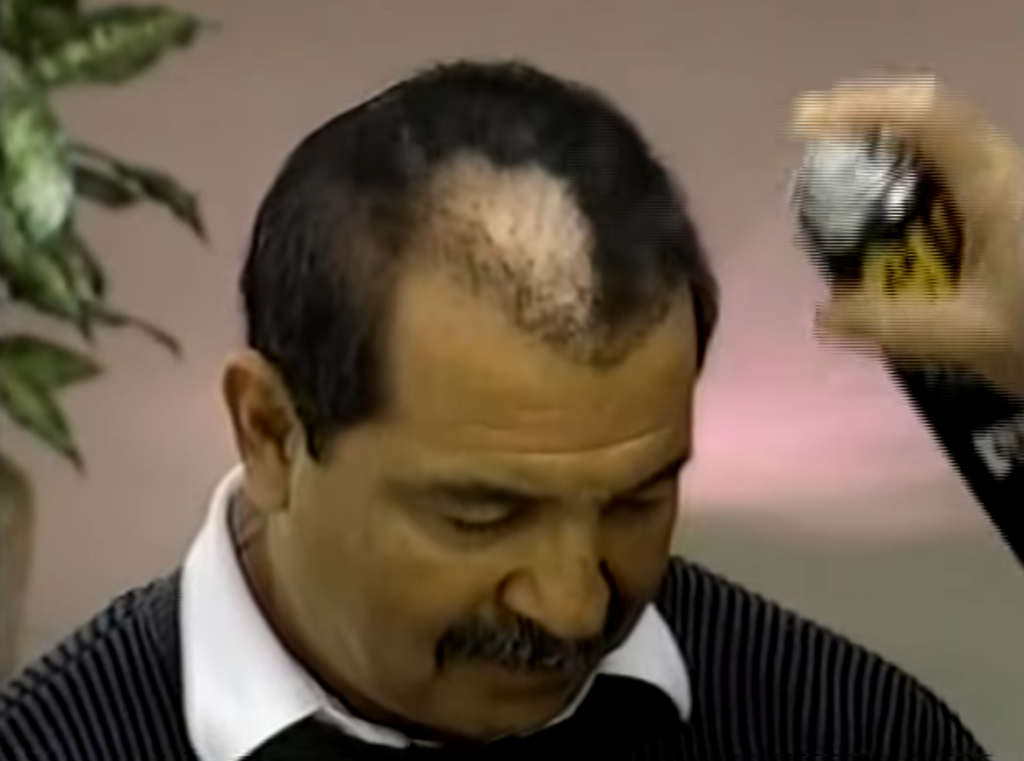
Surprisingly, Rob has regained all his lost hair, completely naturally, without drugs, transplants, wigs, toupees, or that blackening hair spray that used to be sold through infomercials.

Nothing beats a demonstration

So how did Rob do it? In a nutshell:

Detumescence therapy.

Basically, Rob performed a special massage on his scalp, twice a day, every day, for about a year. After month five or so, hair slowly started growing back. By the end of the year, he regrew most of the hair he had lost over the previous decade.

So what’s going on?

Well, there are a few legitimate ways that detumescence therapy might actually work.

One is that the massage releases excess sebum that’s been stored in the scalp, which is slowly choking off hair follicles. Another is that it possibly breaks up and even reverses calcification of the scalp, which has been implicated in hair loss. A third way is that it increases blood flow to the scalp, which is basically the same mechanism that drugs such as Rogaine depend on.

But don’t take my word for it.

Detumescence therapy was first described in a scientific paper back in 2012, by a team out of the University of Hong Kong. It was based on a clinical study in which 100% of the subjects regrew 90% of their hair.

And it has been supported by additional studies out of Japan, which looked at the effects of massage and acute inflammation on hair regrowth.

Anyhow, I’m not here to pitch detumescence therapy to you. (If you want to find out more about it, I recommend Rob’s site Perfect Hair Health.)

All I wanted to do was to illustrate a technique I just learned from an interview with one of the most successful copywriters of all times, Parris Lampropoulos.

Parris writes a lot in the health space.

And in this interview, he shared a three-step process for presenting outrageous (but true) health claims, and convincing prospects that they are real. You can see an example of it in this post. It basically goes story-explanation-studies.

And if you want more such examples, or a breakdown of other ways to present health claims, sign up for my upcoming book.

It deals with email marketing for the health space.

It’s not out yet. But you can get a free copy when I finish it up if you sign up now:

https://bejakovic.com/profitable-health-emails/

The four horsemen of the Upwork apocalypse

A friend asked me about Upwork recently.

He wanted to know, are there red flags for job listings? In other words, are there some jobs you should never apply for, because the clients are guaranteed to be trouble?

And lo, I had a vision.

Four horsemen. Each more awe-inspiring than the one before.

Now these four horsemen do not bring death, pestilence, famine, and war. But they do bring frustration, low wages, uninteresting projects, and stress. Let me tear open the four seals of my upcoming Upwork Bible, and tell you about them:

1. The blue banana horseman

Riding on a perfectly normal job listing, this horseman carries a banner. And on that banner, it is written:

“Add the words ‘blue banana’ at the top of your application so I know you read this whole thing.”

This horseman is very clever. And he’s too clever by far for any decent freelancer. If you engage with him, be warned, it will end in frustration.

2. The waffle horseman

This horseman arrives in a cloud of mist.

In his hand, he carries a waffle. That’s because he doesn’t know what he wants, or he cannot express it. So his job listing is ominously broad:

“Looking for an expert to help me grow my business through marketing. You need to know video editing and design and copywriting. Added bonus if you’re good at Excel.”

What this horseman is really saying is, “My business isn’t profitable yet. But heavy is my burden of small, confusing tasks. Come inside my empire and you will be rewarded meagerly.”

3. The pied pier horseman

This horseman can be recognized from afar by the symbol blazing on his chest. It reads:

“Rewrite this paragraph to prove to us you’re right for this job.”

The pied piper horseman does not do this because he’s trying to cheat you or get something for nothing. Instead, it’s because he thinks of freelancers like lemmings: small, requiring tight corralling, and incapable of independent thought.

Beware of following the pied piper horseman, because he will lead you over the cliff into uninteresting, menial work.

4. The grim reaper horseman

The Upwork grim reaper does not hold a scythe in his hand. Instead, he carries an hourglass, which has just run out of time. This horseman has a tight deadline, requiring an 8,000-word VSL, which needs to be done by this Thursday. And he needs you to start work on it NOW.

If you allow this horseman to wrap you up in his raven’s wings, expect untold stress to descend upon you. At least until Thursday, and possibly even later.

Now these creatures and others haunt the Upwork job listings page.

They are not evil. But neither are they righteous clients.

I advise you to stay away from them, and focus on better work. And as for that Bible I mentioned at the start:

You might like it if you are wandering through valley of Upwork. It will show you how to avoid the unrighteous clients, and to stay on the path that leads to the light ie. high hourly rates. To get notified once I complete this book (in the next week or two), inscribe your name on the following:

https://bejakovic.com/upwork-book-notification-list/